
GAMES PEOPLE PLAY 2026
A modern field guide to Eric Berne’s Games

In 1964, psychiatrist Eric Berne published “Games People Play”, arguing that much of everyday social life isn’t candid, nor intimate. Instead, it’s a “Game”: a repeated pattern of interaction with a hidden motive and a predictable, often self-defeating payoff at the end. A way to confirm your own reality tunnel, justify your “favorite bad feeling”, and stay in the safety of a sense of control – yup, things are still the same old, same old! They are often passed down through the generations.
The surface conversation (the social level, the words being used) says one thing; underneath it (the psychological level, or undertow), we communicate something different. Many examples would today be called “gaslighting”, in which the manipulator adopts a one‑up position and forces the other person into a one‑down position by undermining their reality. Berne mapped dozens of these patterns, from marriages to bar fights to therapy sessions. Below, I explain the Game patterns with examples from our 2026 reality.
All Games can be played at three levels: first, second, and third degree.
A First-Degree Game is socially acceptable in public circles.
A Second-Degree Game doesn’t cause permanent, irremediable damage, but players prefer to avoid the public eye.
A Third-Degree Game is played for keeps, and it ends in the hospital, the courtroom, or the morgue.
The degree is set by how hard, intense, and tenaciously it’s played.
A “gentle” player can walk away from a game easily and doesn’t need a hard-hitting payoff.
A “hard” player is rigid, escalates when challenged, and needs a serious payoff to feel satisfied. Playing Games can be genuinely destructive as a hard, third-degree grievance-collecting habit that structures someone’s personality and has a toxic impact on the people around them.
The line between “self-harming” and “harming others” is blurry, because most Games have at least two roles. The “Addict” needs a Persecutor and a Rescuer to complete the pattern; “Now I Got You, You SOAB” needs a target. So, a Game may look self-contained in its damage (drinking, debts), but it is usually casting others into supporting roles. To break the Game, another cast member must stop playing their part, which is hard if there’s secondary gain as the “Rescuer” or the “Victim”.
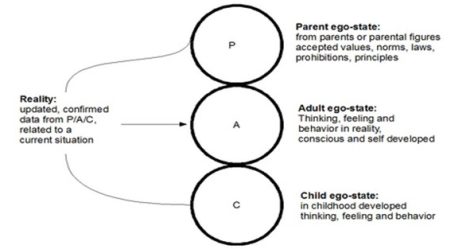
Berne describes people as shifting between three “ego states”: Parent (inherited rules and judgments), Adult (objective, present-tense reasoning), and Child (spontaneous feeling or old adaptations to authority).
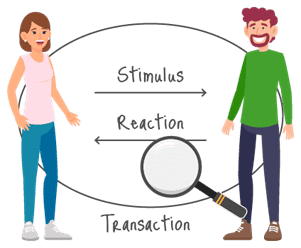
Games typically look like Adult exchanges on the surface but are running a Parent-Child crossed transaction underneath. They follow the “Drama Triangle” with role switches between Victim-Rescuer-Persecutor and the related switches between I+ / I- and You- / You+.
The switch ensures both parties are left with their “Favorite Bad Feeling” as the payoff to the Game.
For instance, gaslighting typically involves the Persecutor role (Critical Parent) in the I+ role and the Victim (Adaptive Child) in the You- role as the person being manipulated.
If this is new information to you, read more about this psychological framework in my blog on Transactional Analysis before reading the Games below.
The point of naming these patterns is to notice which ones you’re running on autopilot
& to find out what happens with a relationship, your family, or a (working) day when
YOU… JUST… DON’T… PLAY…









 suffering comes from our thoughts, desires, convictions about what life should be, what should happen, not from what is actually happening. Suffering will cease as we let go of this clinging & craving for things that aren’t. When we experience grief, we want back what we lost.


 I read Umair Haque’s HBR piece “